
Relocating to Hurricane, UT: Essential Tips for a Smooth Transition in 2026
Relocating to Hurricane, UT: Essential Tips for a Smooth Transition in 2026
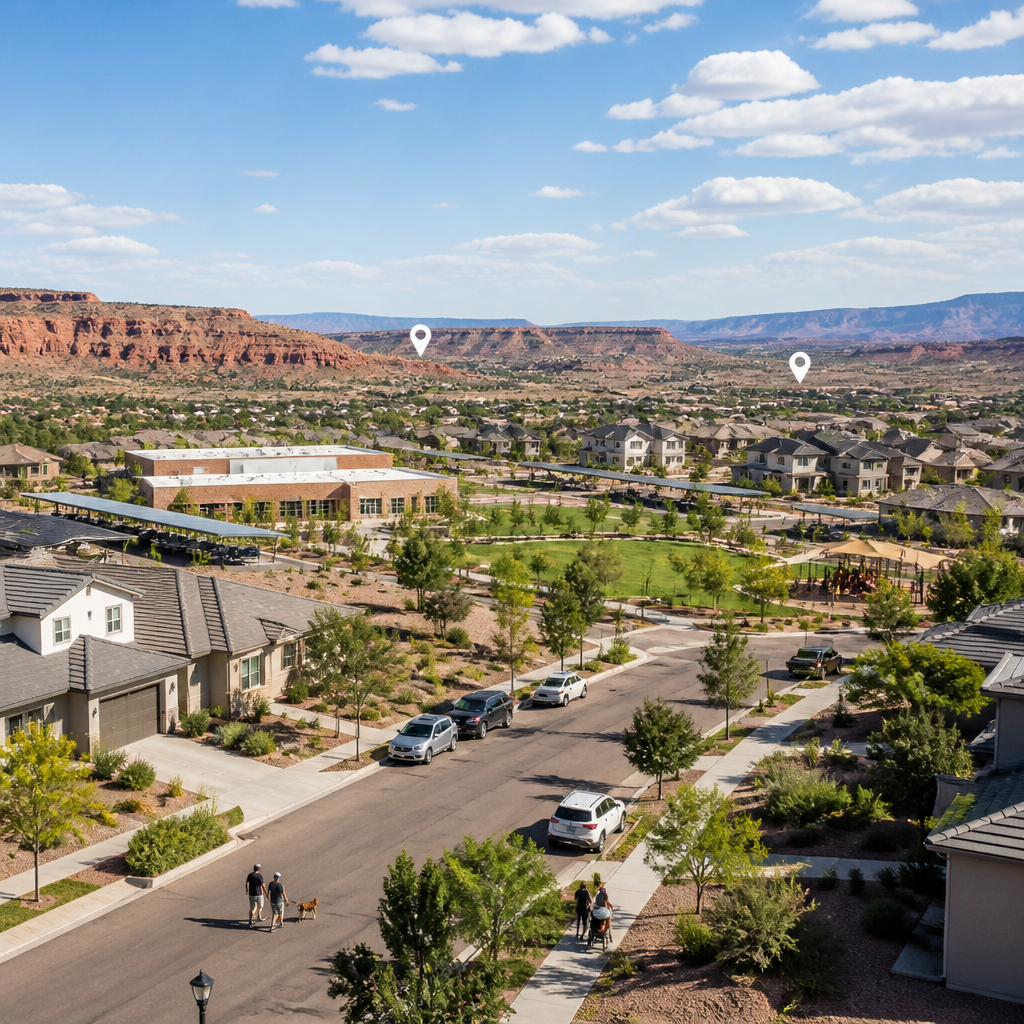
Relocation to Hurricane UT in 2026 appeals to households seeking scenic desert landscapes, quick access to outdoor recreation, and a smaller-city lifestyle. According to U.S. Census QuickFacts, Hurricane’s population grew roughly between 30% and 40% from 2010 to 2020, signaling sustained demand and ongoing development. That pace shapes everything from housing availability to school planning, making careful research crucial for anyone preparing a smooth, well-timed transition into this Washington County community.
What Neighborhood Layout and Commute Patterns Define Hurricane?
Hurricane centers around State Street and State Route 9, with residential pockets stretching toward 300 South, 1150 West, and the Sand Hollow corridor. According to Walk Score, Hurricane scores in the low 30s for walkability, so most residents rely on cars. The layout favors quick drives rather than dense urban strolling, especially between older neighborhoods near Hurricane City Park and newer subdivisions close to Sand Hollow Resort and Copper Rock Parkway.
Commuters frequently travel along State Route 9 and Interstate 15 toward St. George, Washington, and Ivins. The drive from central Hurricane to downtown St. George typically runs 20 to 25 minutes in normal traffic, while the trip to Utah Tech University averages about 23 miles. According to traffic data summarized by Utah Department of Transportation, average daily traffic volumes on SR-9 have increased steadily since 2015, reflecting regional growth.
Neighborhood choice often hinges on balancing commute patterns with proximity to recreation. Homes near 700 West and 400 South offer short drives to Hurricane High School and the Hurricane City Recreation Center. Subdivisions closer to Sand Hollow State Park trade slightly longer St. George commutes for quick lake access. Those arriving from larger metros such as Salt Lake City or Las Vegas frequently report that Hurricane’s traffic remains manageable, even as local infrastructure adapts to expansion around the SR-9 gateway.
How Do Housing Options and Prices Look for 2026 Arrivals?
According to Redfin data through mid-2025, Hurricane home prices typically fall between $400,000 and $650,000, depending on size and proximity to amenities. Newer single-family homes around Sand Hollow Resort and Copper Rock Golf Course often command premiums, especially with three-car garages and RV pads. Older bungalows near Main Street and 200 West present lower entry points but may require renovation budgets ranging from $15,000 to $40,000 for modern updates.
Townhomes and smaller single-level properties provide options for downsizers and second-home buyers. Based on ranges reported by Zillow in early 2025, attached homes often close between $320,000 and $450,000. Short-term rental regulations near Sand Hollow and Sky Mountain Golf Course can influence pricing, making due diligence on zoning and homeowners association rules essential. Many planned communities add monthly HOA fees between $80 and $250, which should factor into ownership budgets.
Evening showings near Sky Mountain Golf Course often reveal Hurricane’s atmosphere more clearly than any data sheet. As sprinklers mist along North 2600 West, the scent of damp desert soil mixes with fresh-cut grass, while soft conversation carries from porches along Fairway Drive. The last sunlight glows orange against the red cliffs above 600 North, and golf carts hum quietly back toward garages, creating an almost resort-like calm that contrasts with the busier feel of State Street only a few blocks away.
What Should New Residents Know About Schools and Education?
Public schools in Hurricane fall under the Washington County School District. Hurricane High School on 400 South serves grades 10–12 and feeds from Hurricane Intermediate School and Hurricane Middle School near 870 West. According to Niche 2025 ratings, the district earns generally above-average marks for college readiness and teacher quality, with class sizes often in the low- to mid-20s.
Families with younger students typically connect with Hurricane Elementary School near 100 North, Three Falls Elementary on 1900 South, or nearby Coral Canyon Elementary in Washington. GreatSchools data for 2025 shows ratings in the 6–9 range for several campuses, based on test scores and parent reviews, as reported by GreatSchools. Private and charter options expand in neighboring St. George, where schools such as Tuacahn High School for the Arts attract students from across Washington County.
Higher education access centers on Utah Tech University in St. George, about 22 to 24 miles from central Hurricane. According to Utah Tech University, enrollment exceeds 12,000 students, with programs ranging from health sciences to engineering. Commuters from Hurricane often schedule classes to minimize rush-hour traffic along I-15. Many households factor potential tuition savings from in-state rates into long-term housing decisions, especially when comparing Hurricane to more expensive Western markets.
How Do Everyday Amenities, Parks, and Recreation Shape Daily Life?
Hurricane’s location near Sand Hollow State Park and Quail Creek State Park remains a primary relocation driver. According to Utah State Parks, Sand Hollow hosts more than 1 million annual visits, offering boating, paddleboarding, and extensive off-highway vehicle trails. The park sits roughly 5 to 7 miles from many Hurricane neighborhoods, turning quick after-work swims or weekend camping trips into routine outings rather than special vacations.
Weekend mornings around Hurricane City Park and the adjacent Pioneer Park splash pad often smell of sizzling breakfast burritos from nearby food trucks and fresh coffee from Main Street Cafe on State Street. Children’s laughter blends with the steady whoosh of sprinklers hitting warm sidewalks as families set up shade tents along 100 West. A light breeze carries the dusty, sunbaked scent from the red cliffs above 600 North, while basketballs thump rhythmically on the courts beside the Hurricane City Recreation Center.
Golf and trail access further define local life. Sky Mountain Golf Course provides fairways with distant views of Zion National Park’s cliffs, while Copper Rock Golf Course south of town hosts professional events that draw visitors from St. George and beyond. Trails such as Confluence Park near La Verkin and the Virgin River corridor offer hiking and biking within a 10- to 20-minute drive. Retail essentials cluster along State Street, including Walmart Supercenter, Lin’s Fresh Market, and several local restaurants such as River Rock Roasting Company in nearby La Verkin.
What Cost-of-Living and Utility Factors Affect Budget Planning?
Overall cost of living in Hurricane typically tracks slightly above national averages but below many coastal metros. According to BestPlaces 2025 data, the overall index for Hurricane sits in the 105–115 range, with housing as the primary driver. Renters often find two-bedroom apartments or townhomes in the broader St. George metro between $1,300 and $1,900 per month, based on early-2025 ranges reported by RentCafe.
Utility planning matters in the desert climate. Summer highs routinely reach triple digits, and electricity usage for air conditioning rises accordingly. Rocky Mountain Power rate structures and Hurricane City utility fees mean monthly electric bills can swing from $80 in shoulder seasons to $250 or more in peak summer for larger homes. Water bills vary with irrigation needs for xeriscaped yards versus traditional lawns along residential streets such as 300 South and 2260 West.
Property taxes in Washington County generally sit near Utah’s statewide averages. According to the Utah State Auditor, effective property tax rates in Utah often fall between 0.5% and 1.0% of assessed value, depending on county and exemptions. That means a home priced at $550,000 in Hurricane could carry an annual property tax range of roughly $2,750 to $5,500. Insurance costs remain influenced by wildfire risk, roof age, and proximity to canyons or open desert.
How Can New Arrivals Prepare for Climate, Lifestyle, and 2026 Timing?
Climate adaptation plays a central role in relocation to Hurricane UT. According to National Weather Service climate normals for nearby St. George, summer highs frequently exceed 100 degrees for dozens of days each year, while winter nights can dip into the 20s. New residents often prioritize homes with shaded patios, energy-efficient windows, and low-water landscaping along streets like 400 South and 1100 West to manage both comfort and monthly expenses.
Seasonality affects both real estate inventory and recreational patterns. Spring and fall typically offer the most comfortable temperatures for home tours, park visits, and moves, while mid-summer heat can complicate midday activities. According to Redfin’s 2025 seasonality charts for Washington County, listing counts often rise by 10% to 20% from February to May, then taper heading into late summer. That pattern influences negotiation leverage, particularly for homes near Sand Hollow Resort and Sky Ridge.
Community integration tends to happen through shared recreation and local events. Annual gatherings in Hurricane City, including Fourth of July celebrations at Sullivan Virgin River Soccer Park and events at the Hurricane Fine Arts Center, create natural introduction points. Faith communities, pickleball leagues at the Hurricane City Recreation Center, and volunteer groups tied to Zion National Park trail projects provide additional connections. Early engagement in these settings generally shortens the adjustment period for households arriving from larger, more anonymous metro areas.
The 30% to 40% growth rate cited at the start of this guide reflects Hurricane’s transition from a quiet gateway town into a regional hub with expanding infrastructure and services. That population figure from the opening underscores why housing, schools, and transportation are evolving simultaneously rather than sequentially. The UtahRealEstate.com MLS regional database offers the clearest ongoing view of active listings, price reductions, and days-on-market trends across Hurricane and nearby communities. Households that register listing alerts through that platform and commit to touring promising homes within 48 hours of activation before the peak spring 2026 inventory window will capture a broader range of options, while delayed responses risk facing tighter choices and more competitive terms later in the year.